
The Post and Courier
January 30, 2026
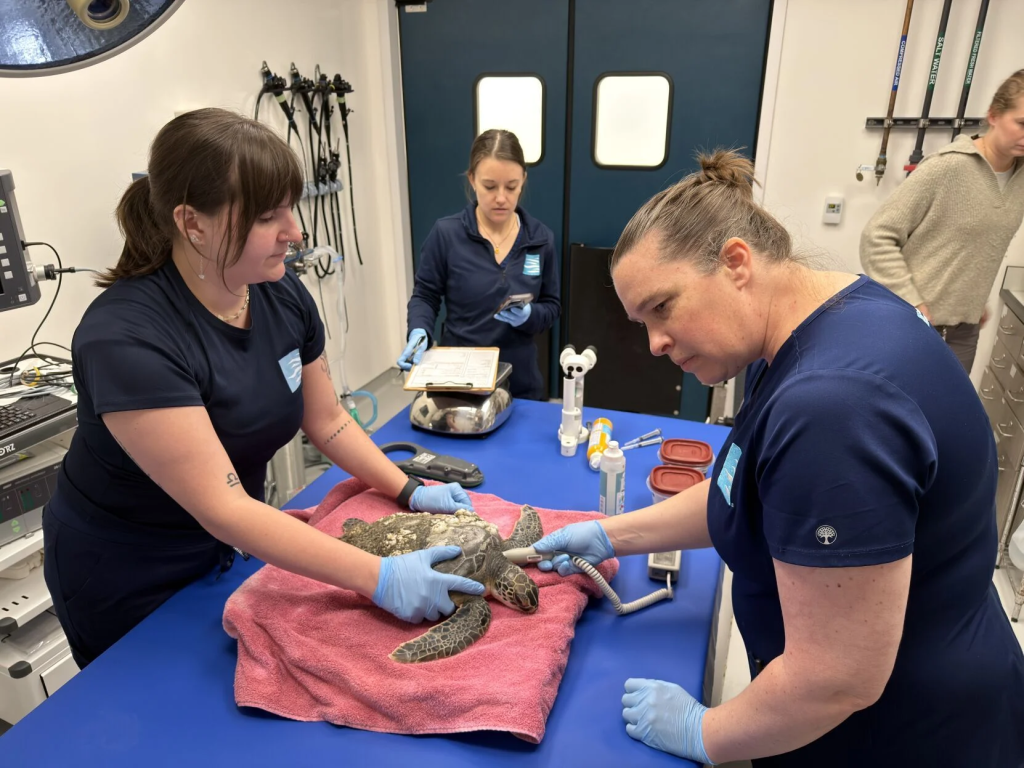
Humans aren’t the only Lowcountry residents feeling the cold.
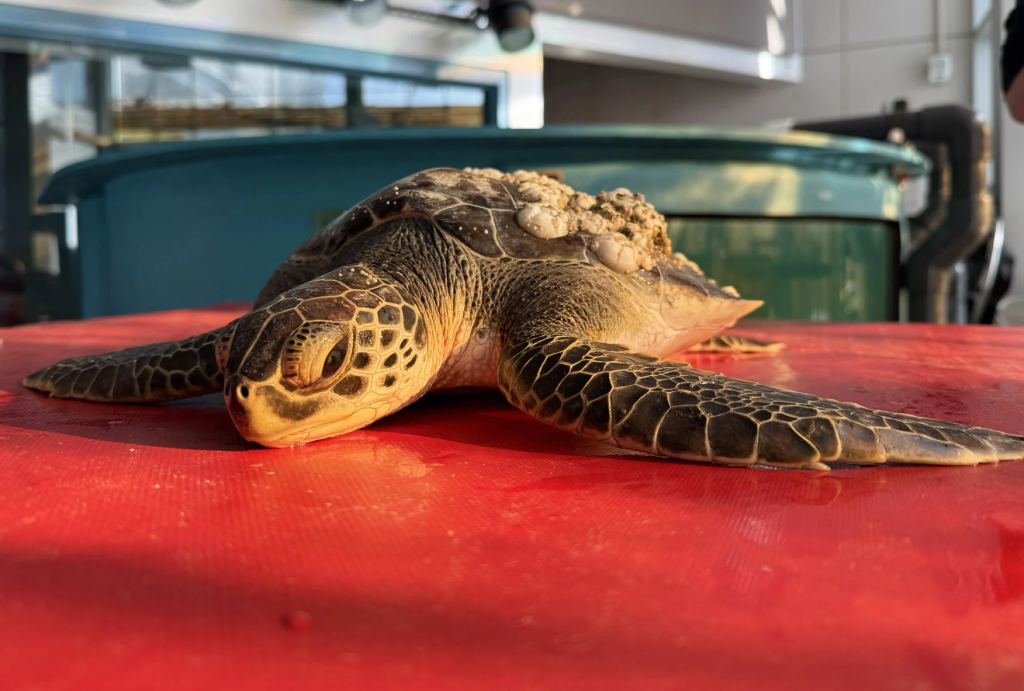
The South Carolina Aquarium’s first admission of the year is a cold-stunned green sea turtle. The juvenile was found by a beach walker Jan. 26 on Hilton Head Island and transported by volunteers to the aquarium for treatment.
As the first turtle rescue of 2026, the staff named it Ketchup. All other turtles rescued this year will be named after condiments and sauces, Susan McLaughlin, a spokesperson for the S.C. Aquarium, said.
As Ketchup undergoes rehabilitation, the cold temperatures persist into the weekend. As the forecast remains chilly in the coming days and overnight temperatures continue to dip below freezing, chances good that more sea turtles will wash up on South Carolina beaches in need of a warm-up.
A group effort
After Amber Kuehn, executive director of the Hilton Head Sea Turtle Patrol, received a call about the cold-stunned turtle around 8 a.m. Monday, the race was on to get the turtle the care it needed. Kuehn, who holds a DNR permit to manage stranded turtles, gave permission to the island’s life guards to move the turtle off the beach until a trained volunteer was able to pick up Ketchup.
Sea turtles are cold-blooded reptiles, meaning their body temperature adjusts according to the surrounding environment. As a turtle get colder, their heart rate and metabolism slows down, allowing them to survive colder temperatures for short periods of time.
If it’s too cold for too long, sea turtles can become cold-stunned. They stop swimming and then get pushed onshore by the tides, waves and wind, according to the S.C. Aquarium.
When turtles need to be transported by the Hilton Head Sea Turtle Patrol to the Aquarium, the volunteer meets DNR at a halfway point, and the agency transports the turtle to the aquarium for rehabilitation, Kuehn said. Because the turtle’s temperature must be raised gradually, recently rescued sea turtles are kept at the temperature they were found at until they reach the aquarium, meaning volunteers need to drive with the car heat turned off, Kuehn said.
The warm-up
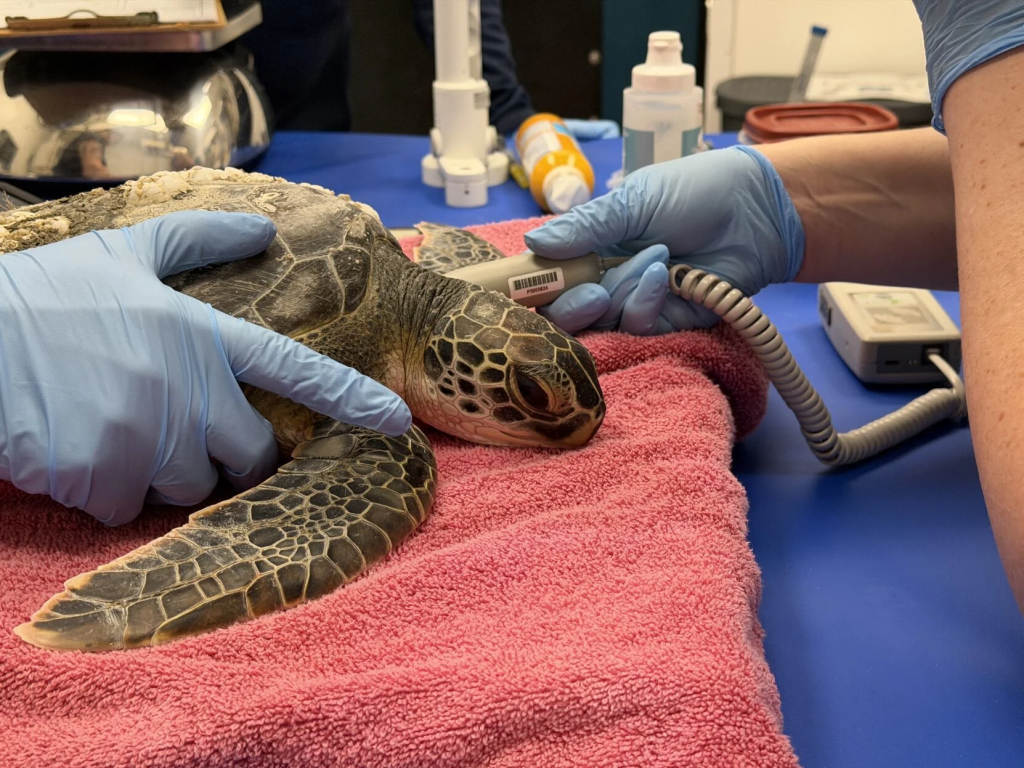
When it arrived at the S.C. Aquarium, Ketchup was in rough shape. While healthy turtles typically have a body temperature between 70 and 75 degrees, Ketchup’s was around 46 degrees and its heartbeat was low and irregular.
“Ketchup was very chilly,” Ashley Wright, sea turtle biologist at the S.C. Aquarium, said.
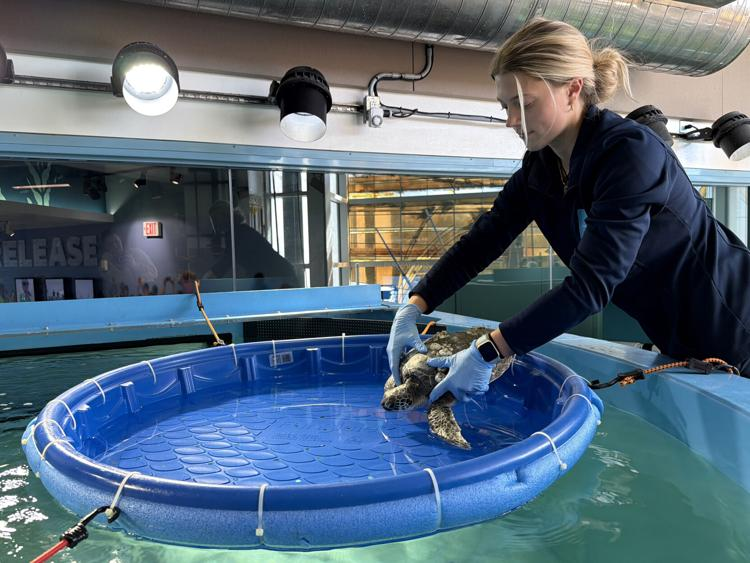
Warming up too quickly can cause the turtle to go into shock, so staff at the aquarium have been raising Ketchup’s temperature by about 10 degrees a day. A low body temperature isn’t the only problem cold-stunned turtles face. Many also experience frostbite and pneumonia.
As Ketchup continues to warm up, other issues in the turtle’s lungs and gut might become known as its body begins to function again, Wright said.
“Those problems that may have been lying dormant will suddenly come up to the surface,” Wright said.
South Carolina’s sea turtles generally migrate out of the area during the winter months, Wright said. In the last few years, the aquarium has taken in around 10 cold-stunned sea turtles each year.
The largest cold stunning event in the United States occurred along the Texas coastline in 2021. Of the over 10,000 sea turtles that stranded, about 35 percent of them survived, according to the S.C. Aquarium. In Cape Cod, rapid warming and shifting of ocean currents due to climate change have led to a sharp increase in the number of stranded sea turtles, who are effectively trapped once temperatures drop in the winter, according to reporting from Inside Climate News.
In South Carolina, turtles that stay in the area typically have access to food and steady temperatures. As climate change continues, winter is the fastest warming season in much of the country. The jet stream also is weakened by climate change, leading to occasional cold arctic temperatures dipping into the Deep South.
As of Wednesday afternoon, Ketchup’s temperature was around 65 degrees. If its recovery goes as planned, the turtle likely will be released into the wild in four to six months.
In coming days, temperatures in South Carolina will continue to swing back and forth, Wright said. More cold-stunned turtles may turn up.
Click here to view the article
By Lydia Larsen llarsen@postandcourier.com