

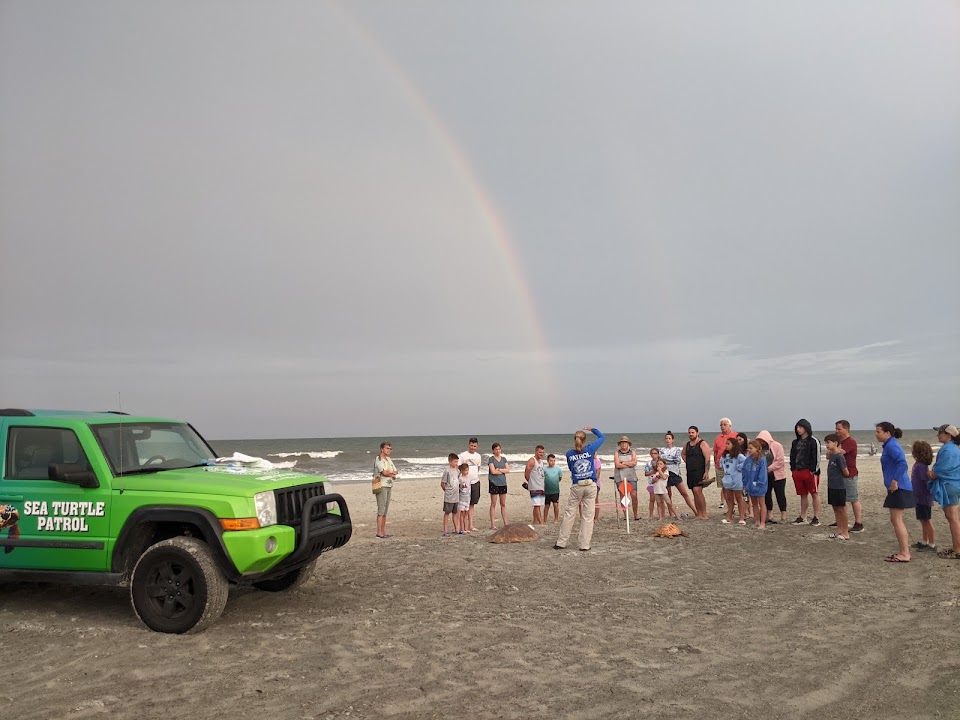
Registration is Required: Register Here
Wednesdays 8-9pm – On the Beach at the Dunes House
Rates: $20 per person (capacity is limited)
Our Turtle Talk educates participants on what they can do to help preserve Hilton Head Island’s hatching sea turtles and learn what is happening on our nesting beach.
Turtle Talks will be held on Wednesday nights June-August on the beach.
The program is designed for both visitors and residents
Cost to attend is $20 per person, capacity is limited, this event sells out every week, and all children under the age of 12 need adult supervision.
Online registration is required!
Event Notes: You will need to be able to walk out on the beach, so those with mobility challenges might have difficulty. If you have problems standing for a long period of time or sitting in the sand, please bring a chair. The Turtle Talk is best-enjoyed by adults and children ages five and older, but all children over the age of two are required to purchase a ticket to attend.
Want to learn more about how you can help the sea turtles visiting Hilton Head Island? Join our mailing list and receive up-to-date information on nesting and our Patrol activities throughout the year.
Click Here to Sign Up for our Newsletter
A green sea turtle (Chelonia mydas) encountered around Hilton Head Island represents one of the world’s largest hard‑shelled marine reptiles, known for their herbivorous diet and reliance on warm, shallow coastal habitats. Although loggerheads dominate South Carolina nesting activity, juvenile green turtles forage in the region’s estuaries, where seagrass and algae provide essential nutrition. Like all reptiles, green turtles are ectothermic, meaning their body temperature depends on the surrounding water. When sudden winter cold fronts push water temperatures below roughly 50°F (10°C), turtles can experience cold‑stunning, a hypothermic state in which they become lethargic, lose the ability to swim, and may float to the surface or wash ashore. Cold‑stunned turtles are vulnerable to drowning, boat strikes, and predation, and require rapid rescue to prevent secondary complications such as pneumonia or shock. Conservation groups along the Southeast coast monitor for these events, as even a single cold snap can impact multiple species—including green turtles—within the island’s interconnected marshes and tidal creeks. Understanding cold‑stunning helps highlight how sensitive sea turtles are to temperature shifts and why protecting their habitats is essential for long‑term survival.