
35 events found.
Events
Calendar of Events
|
Monday
|
Tuesday
|
Wednesday
|
Thursday
|
Friday
|
Saturday
|
Sunday
|
|---|---|---|---|---|---|---|
|
0 events,
|
0 events,
|
0 events,
|
0 events,
|
0 events,
|
0 events,
|
0 events,
|
|
0 events,
|
0 events,
|
0 events,
|
0 events,
|
0 events,
|
0 events,
|
0 events,
|
|
0 events,
|
0 events,
|
0 events,
|
0 events,
|
0 events,
|
0 events,
|
0 events,
|
|
0 events,
|
0 events,
|
0 events,
|
0 events,
|
0 events,
|
0 events,
|
1 event,
-

We are honored to be selected as the Burnt Church Distillery "Give Back Partner" for the month of May 2026. Stop by Burnt Church Distillery on May 24th from 12pm to 5pm to "Sip and Shop" with Sea Turtle Patrol. Burnt Church Distillery, located at 120 Bluffton Rd, Bluffton, SC, is a charming craft distillery... |
|
0 events,
|
0 events,
|
1 event,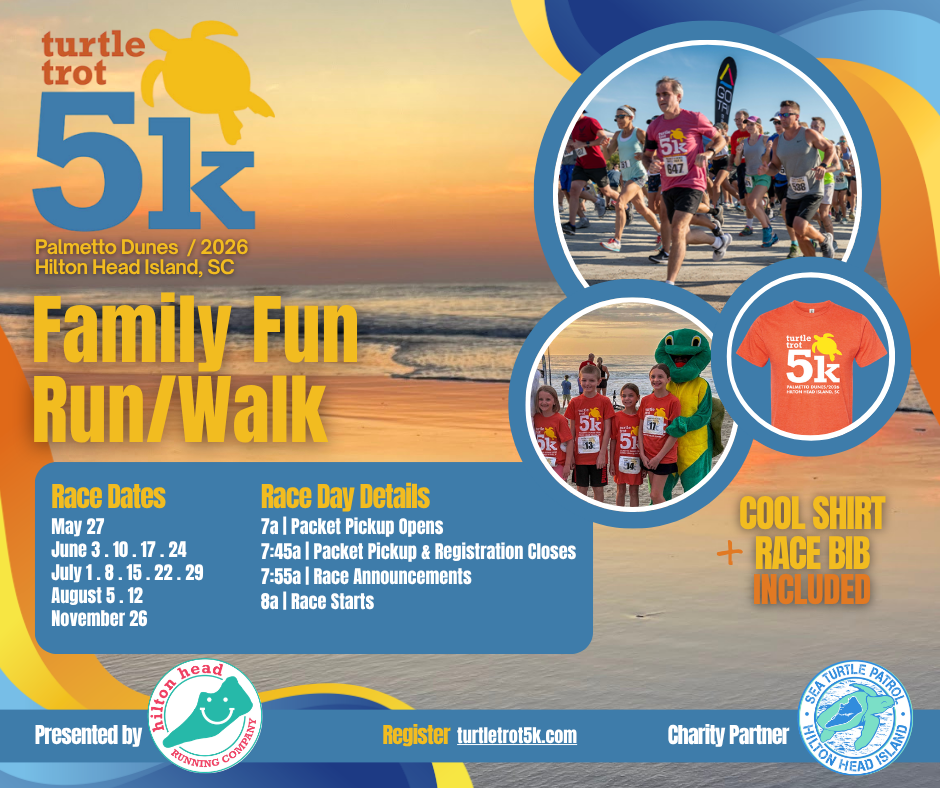
Sea Turtle Patrol HHI is proud to be the Charity Partner of this year's PALMETTO DUNES TURTLE TROT 5K -- a family-friendly, 5 kilometer run/walk taking place in the beautiful Palmetto Dunes Resort - Hilton Head Island, SC. Bring your friends and family to run or walk on our beautiful, flat, hard, sandy beaches --... |
0 events,
|
0 events,
|
0 events,
|
0 events,
|